



Blog
Switzerland’s Independent Cannabis Path: From CBD Labelling Rules to Recreational Pilot Models

Why Switzerland Stands Apart from EU Cannabis Policy
Switzerland’s approach to cannabis regulation has long puzzled and impressed its European neighbours. Though geographically at the heart of Europe, the country’s legal and policy independence from the European Union have enabled it to pursue its own path—one rooted in harm reduction, pragmatism, and scientific evidence rather than ideology.
Unlike EU member states, Switzerland is not bound by the bloc’s strict narcotics framework directives, giving it the freedom to test alternative strategies. While the EU continues to debate the classification of CBD and the potential for controlled recreational markets, Switzerland has already operationalized a dual-track policy: a stable framework for low-THC CBD products and a limited pilot scheme for adult recreational use.
Legal Independence and Historical Background
Switzerland’s cannabis debate stretches back decades. Since the early 2000s, the country has balanced de facto tolerance for minor possession with strict penalties for trafficking and unregulated cultivation. In 2011, possession of up to 10 grams was downgraded from a criminal offense to a civil fine.
This pragmatic stance reflected the Swiss public’s consistent view that criminalization was ineffective. Instead, the focus shifted to public health, youth protection, and harm reduction. Over the following decade, Switzerland developed a regulated CBD market and built the infrastructure necessary to explore broader legal reforms—culminating in today’s recreational pilot projects.

The 1% THC Rule — The Foundation of Swiss CBD Law
At the centre of Switzerland’s cannabis policy lies its most distinctive rule: the 1% THC threshold.
Under Swiss law, cannabis products containing less than 1% tetrahydrocannabinol (THC) are not classified as narcotics. This threshold—significantly higher than the EU’s 0.2–0.3% limit—allows for the legal sale of CBD-rich products such as oils, flowers, and cosmetics, provided they meet labeling and safety standards.
This rule created an entire CBD industry years ahead of most EU markets. It also drew sharp contrasts: Swiss companies could produce and export a range of CBD goods that would be illegal in neighboring states, highlighting the policy gap between Bern and Brussels.
Product Categories: CBD Oils, Flowers, Cosmetics, and Aromatics
The Swiss market now includes a wide spectrum of CBD products.
- CBD oils and tinctures are sold as aromatic or technical products, avoiding medical claims.
- CBD flowers and smokable hemp are legal if THC remains below 1%.
- Cosmetics and aromatherapy items are permitted under consumer product laws, but they cannot claim therapeutic benefits.

This nuanced categorization requires strict testing and documentation. Retailers must ensure accurate THC percentages and include consumer disclaimers. The Federal Office of Public Health (FOPH) and Swissmedic jointly supervise compliance and issue periodic guidance to prevent misleading claims.
While Switzerland forbids commercial promotion of cannabis for psychoactive purposes, it has nurtured a thriving CBD innovation ecosystem. Domestic and international breeders—including industry pioneers like In House Genetics—have contributed to the development of high-CBD, low-THC strains optimized for Swiss legal thresholds. These genetics are often discussed in agricultural and academic contexts, where the focus remains on plant science rather than recreational use.

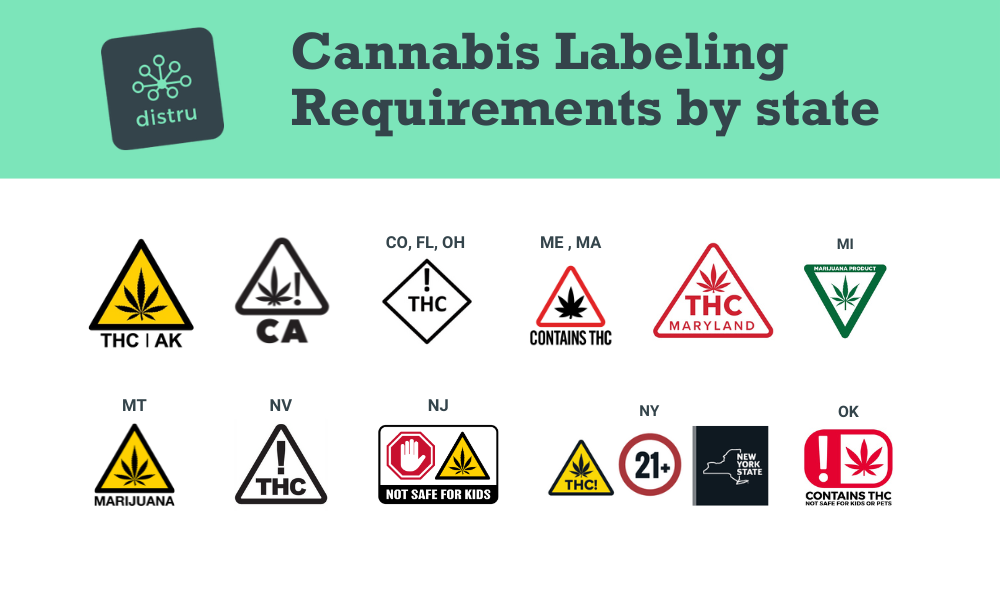
Labelling Standards and Consumer Protection
Switzerland’s labeling requirements are deliberately transparent.
Products must include:
- Clear THC and CBD content percentages
- A declaration that the product is “not for medical useâ€
- Batch traceability data for testing verification
- Warning labels against consumption by minors or during pregnancy.
This regulatory precision gives Swiss CBD a reputation for reliability across Europe. Retailers in the EU frequently cite Swiss compliance standards as benchmarks for future legislation, even though Swiss products exceeding EU THC limits cannot legally enter the bloc’s single market.
Inside the Recreational Pilot Programmes
In 2021, the Swiss parliament amended the Federal Narcotics Act to allow scientific pilot trials of regulated recreational cannabis supply. The goal was not immediate legalization, but evidence-based experimentation. The first pilot, launched in Basel in 2022, set the tone for the program’s cautious expansion.
Three Distribution Models Under Federal Supervision
By 2024, the FOPH had authorised multiple pilot sites across Switzerland — in Basel, Zurich, Lausanne, Geneva, and Bern — covering roughly 5,000 participants. Each pilot tests a different distribution method under strict federal supervision:
- Pharmacy-based sales, offering controlled access through medical infrastructure
- Cannabis social clubs, operating as non-profit associations
- Municipal dispensary models, integrating public health education with distribution
All products in the pilot are domestically cultivated by licensed growers. THC levels, pesticide residues, and contaminants undergo rigorous laboratory testing. Every transaction is recorded to monitor consumption patterns, demographics, and health outcomes.
This scientific precision mirrors the country’s data-driven governance culture: regulation is built upon empirical evidence, not political ideology.
Early Data: Consumption Patterns and Public Health Outcomes
Early results suggest stable consumption levels and reduced reliance on black market sources. Participants report improved access to safe, tested products, while law enforcement has redirected attention from minor possession to trafficking.
Health data from the first Basel and Zurich trials show no significant rise in youth consumption, reinforcing arguments that regulation does not automatically lead to normalization. Public opinion surveys indicate growing support for expanding the pilot to additional cities, though some concerns remain about administrative complexity and rural access.
Lessons for the EU and Neighbouring Countries
Switzerland’s dual cannabis framework—regulated CBD under the 1% rule and pilot-tested recreational access—positions it as a laboratory for European policy innovation. EU policymakers are watching closely, particularly as Germany, Malta, and the Czech Republic pursue partial reforms.
Why Switzerland’s Approach Could Reshape the EU Debate
The Swiss model demonstrates that controlled legal access can coexist with public health safeguards.
By prioritizing research, data collection, and local governance, Switzerland is generating real-world evidence that many EU states lack. The FOPH’s transparent methodology contrasts with the EU’s fragmented approach, where member states often act in legal isolation.

Moreover, Switzerland’s experience challenges the EU’s narrow definition of industrial hemp. Its success in maintaining product quality while preventing youth exposure provides a potential roadmap for modernizing EU cannabis regulation without undermining international obligations.
For countries like Austria, which maintains a conservative stance under the Suchtmittelgesetz (SMG), Switzerland’s example highlights the feasibility of evidence-led reform. Even modest policy adjustments—such as clearer CBD labeling rules or scientific pilot permissions—could improve transparency and enforcement outcomes across the region.
Final Thoughts: Regulation Through Evidence, Not Ideology
Switzerland’s cannabis journey reflects the country’s broader political identity: independent, pragmatic, and data-oriented.
By distinguishing between low-risk CBD and higher-THC recreational products, the Swiss have crafted a regulatory environment that minimises harm while maximising knowledge.
The 1% THC rule remains the cornerstone of this framework, empowering domestic innovation while reducing confusion among consumers and regulators. Simultaneously, the recreational pilot programs offer Europe’s most advanced test case for post-prohibition policy, guided not by moral panic but by scientific observation.
Whether Switzerland ultimately legalizes cannabis nationwide is still uncertain. Yet its model already proves one thing: regulation informed by evidence outperforms prohibition driven by fear. For its EU neighbors—including Austria—that may be the most valuable lesson of all.
Disclaimer:
This article is for informational purposes only. It does not encourage or promote the use, sale, or cultivation of cannabis. Readers are advised to consult the Federal Office of Public Health (FOPH) and official Swiss legal sources for current regulations.