


Blog
Triploid Cannabis Seeds: An In-Depth Guide

Triploid cannabis seeds are quickly becoming a key focus in cannabis breeding. With the rise of advanced breeding techniques, these seeds offer breeders the unique opportunity to control seed set and enhance consistency across their crops. By minimizing the presence of seeds, triploid plants enable the production of higher-quality, seedless flowers – a trait highly sought after by both commercial cultivators and consumers alike. As the industry evolves, it’s essential to understand the benefits and challenges that come with working with these innovative seeds. Companies like Triploid cannabis seeds are leading the way in developing these genetics, providing breeders with the tools to improve yield and stability. At the same time, breeders and distributors need to stay informed about the latest developments and research in this area, making it essential to partner with reliable sources, such as Pars Planet, for access to premium genetics and seed selections.
What Triploid Cannabis Seeds Are
Understanding Polyploidy in Plants
Most cannabis plants are diploid, meaning they carry two sets of chromosomes (2n). Polyploidy is the term for plants with more than two sets, such as triploids (3n) and tetraploids (4n). In many crops, polyploidy has been utilized to produce seedless fruit and to fine-tune growth and quality traits.
How Triploid Cannabis Is Genetically Formed
Triploid cannabis seeds contain three sets of chromosomes instead of the usual two. In most crop systems, triploid plants are created by crossing a tetraploid parent (4n) with a diploid parent (2n). The offspring inherit three chromosome sets (3n), and this imbalance often leads to reduced fertility or functional sterility. In cannabis, similar breeding concepts are applied in controlled environments.
Differences Between Diploid, Triploid, and Tetraploid Lines
In short:
- Diploid cannabis (2n): the standard form; most commercial varieties.
- Triploid cannabis plants (3n): three chromosome sets; usually very low seed production.
- Tetraploid cannabis (4n): four chromosome sets; mainly used as breeding parents to generate triploids.
These ploidy levels differ in fertility, flower development, and plant architecture, which is why they are central to triploid cannabis genetics research.
Key Characteristics of Triploid Cannabis
Sterility and Seedless Flower Traits
One of the most essential triploid cannabis advantages is reduced fertility. In many plant species, triploid individuals produce little or no viable seed, even when exposed to pollen. In cannabis, this is being explored as a way to support seedless cannabis traits – flowers that remain largely free of seeds even when low levels of pollen are present.
Stability and Genetic Uniformity
Triploid lines are typically developed from carefully selected parental genetics. When well-designed and grown under consistent conditions, they can exhibit higher uniformity in key traits such as seedlessness and basic structure. Triploid cannabis seeds are therefore being tested as tools to reduce unwanted variation in specific production systems.
Growth and Structural Features Under Research
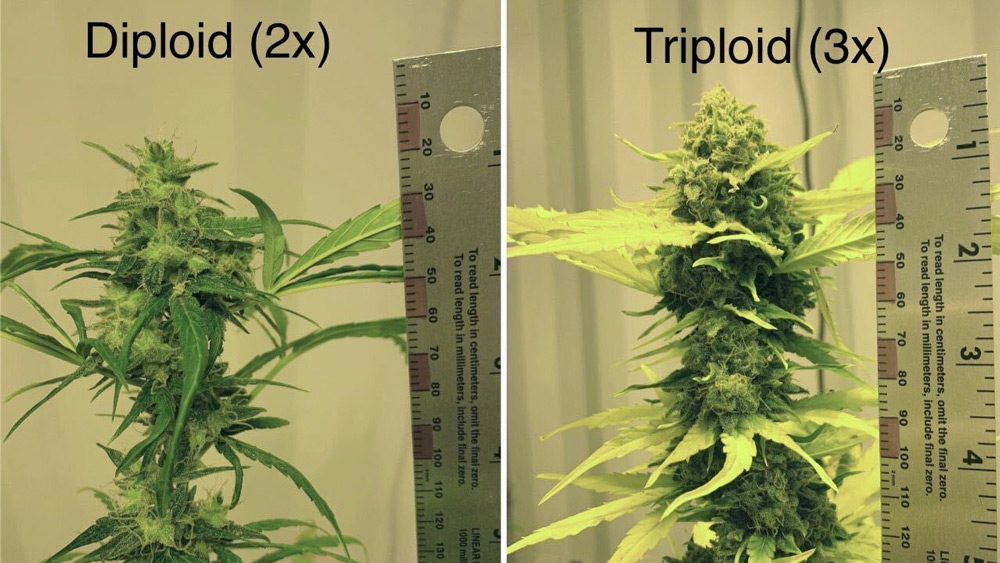
Beyond fertility, triploid vs diploid cannabis comparisons look at growth and structure. In other polyploid crops, altered chromosome numbers can change leaf size, stem thickness, and branching patterns. Early work in cannabis is asking whether triploids display consistent differences in vigour or canopy architecture; results are still emerging and may vary by cultivar.
Potential Advantages of Triploid Cannabis Seeds
Why Sterility Matters for Commercial Production
In professional environments, accidental pollination is a significant threat to flower quality. Once pollinated, plants divert energy into seed production, which can reduce the value of harvested material. Because triploid plants often show very low seed set even when exposed to pollen, triploid cannabis seeds are being evaluated as a genetic risk-management tool for protecting high-value lines.
Evaluated Performance in Controlled Environments
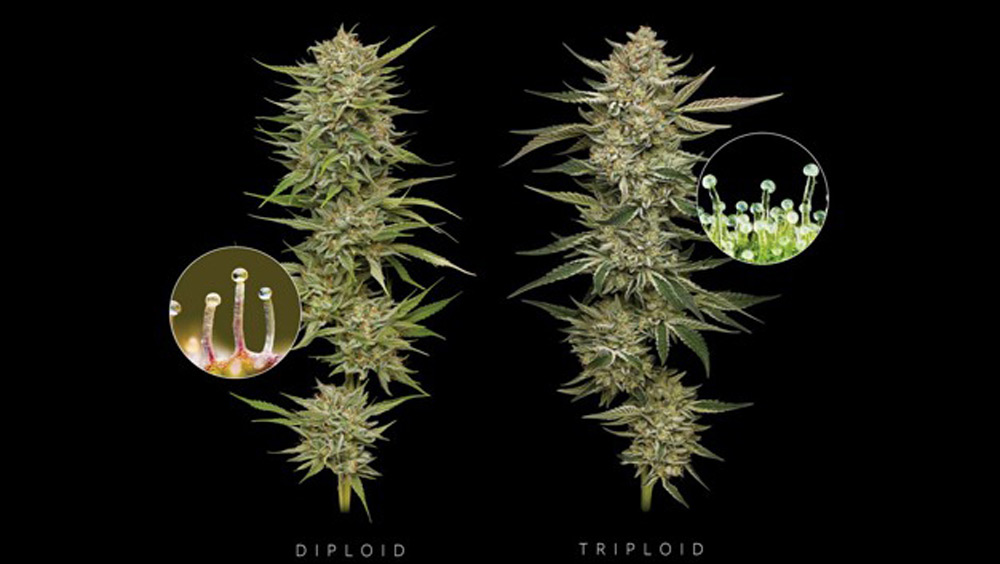
In early trials, comparisons between triploid and diploid cannabis commonly focus on the degree of seedlessness under defined pollen pressure, the uniformity of key traits within a batch, and the stability of performance across repeated cycles. Some reports describe triploid lines that remain almost seedless, whereas comparable diploid lines show precise seeding; however, the data set is still small and does not justify broad promises about yield or other complex traits.
Industry Applications Under Current Studies
Applications being explored for triploid cannabis seeds include commercial flower and hemp programmes that aim for robust seedless expression; genetic R&D platforms using triploids to study links between ploidy, development, and cannabinoid profiles; and quality-focused projects that treat triploid material as a specialised option for premium varieties.
Challenges and Limitations
Production Complexity
Compared with conventional seeds, cannabis triploid production is more complex. It often requires the development and maintenance of tetraploid parent lines, carefully controlled crossing schemes, and reliable methods to confirm the ploidy level, which raises costs and technical barriers.
Research Gaps and Regulatory Considerations
Although polyploidy is well-established in plant science, triploid cannabis genetics remains a relatively young field. Open questions remain around long-term performance in different climates, behaviour in diverse genetic backgrounds, and how regulators will treat triploid plants in frameworks that define hemp or cannabis by THC thresholds regardless of ploidy. Legally, triploid seeds are still cannabis seeds, so licensing, testing, and compliance remain essential wherever cannabis is regulated.
Market Availability and Quality Standards
Currently, triploid material is primarily available through a limited number of specialized breeders and technology providers. Some offer proprietary triploid lines designed to deliver low seed set and controlled performance. For genetics houses with a profile similar to Exotic Genetix, topics such as intellectual property, clear quality standards, and long-term supply security will be central as this segment matures.
Triploids in the Future of Cannabis Breeding
Innovation Trends
Triploids are expected to remain part of cannabis innovation: interest in polyploid cannabis and ploidy manipulation is growing, triploid research is expanding in both fibre and cannabinoid-rich lines, and experience is transferring from other crops where triploids are already widely used. Triploidy is likely to sit alongside marker-assisted selection and genomic tools as one option in a broader breeding toolbox.
Potential Role in Large-Scale Commercial Programmes
For large-scale programmes, the key question is whether the triploid cannabis advantages justify added complexity and cost. Potential benefits under evaluation include reduced seed contamination risk, more reliable seedless expression, and better fit with standardised, high-throughput production. Adoption will depend on independent data, seed economics, and consistent performance across seasons and sites.
Frequently Asked Questions (FAQ)
Q1: What are triploid cannabis seeds?
A1: Triploid cannabis seeds are seeds that contain three sets of chromosomes instead of the usual two and are created through controlled breeding to support stable, low-seed traits.
Q2: How are triploid cannabis plants different from diploid plants?
A2: Diploid cannabis has two chromosome sets, while triploid plants have three, which can lead to reduced fertility, low seed formation, and different agronomic behaviour.
Q3: Why are triploid cannabis seeds considered beneficial?
A3: Triploids are being explored for potential advantages such as very low seed set and improved uniformity in controlled production environments, although research is still ongoing.
Q4: Are triploid cannabis seeds legal?
A4: Triploid seeds are still cannabis seeds in legal terms, and their status depends on regional cannabis laws; users must comply with all applicable regulations.
Q5: Can triploid cannabis seeds be produced at home?
A5: Producing triploid seeds generally requires advanced breeding methods, specific parent lines, and controlled facilities, and this guide does not provide production instructions.
Q6: Will triploid cannabis become more common in the industry?
A6: Many observers expect triploid cannabis seeds to play a growing role in professional breeding programmes, but wider adoption will depend on research outcomes, regulatory clarity, and market demand.